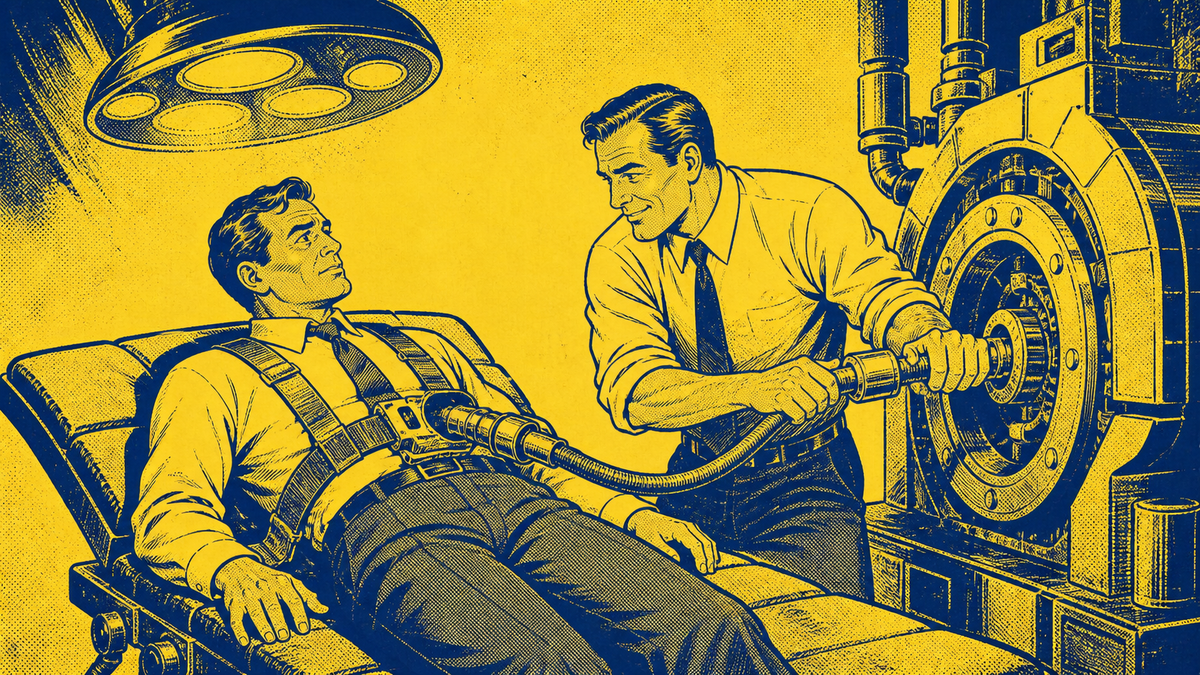
Fear of dying in pursuit of a goal is a healthy thing.
In fact, anyone who doesn't weigh the chances they could die doing something is unlikely to be on this planet very long: it's natural selection weeding out the exceptionally stupid.
Russian roulette
BASE jumping
Picking fights with people twice as big as you
Core banking transformations
All fairly dangerous pursuits!
Now let's look at salespeople.
We exist to encourage buyers out of the darkness and into a different, but brighter future. But our motives are either naive, or transparently self-serving.
Where you are now = bad
Where you could be = much better (Heaven, with free foot rubs, a bar and disco).
We present this perspective and wait for buyers to line up to buy our stuff.
But buyers aren't for the most part stupid, and presenting something as low-risk that clearly isn't undermines our credibility and stops us focusing on the issues that matter most.
Like the chance they will die in the process.
In the case of technology transformations, 'dying' is almost always a metaphor for a failed project, not an actual death. But failed transformation projects are pretty serious.
Millions of dollars are sunk, never to be recovered.
And the sponsor of this project sacrificed on the altar of 'someone's-gotta-pay'. Bye-bye career!
Yet so rarely do salespeople seem aware of the role of risk in the buyer's decision.
When you're working with a prospect on a big transformation business case, think about this side of the equation…
Crystallised risk = Impact of 'Bad Shit' multiplied by the 'Probability of Bad Shit Happening'
You don't need to leaf through many BCG or McKinsey thought-leadership papers to understand that the failure rate for large transformation projects is pant-wettingly high, widely put at more than half.
That's three times worse odds than Russian roulette!
Come decision time, don't be shocked when your prospect's buying committee seems hesitant.
One of the biggest ball-dropping moments of enterprise salespeople is leaving unanswered the issue of implementation in the sales process. Passing the buck to a couple of systems integrators to fight it out over who gets to plug in your software, thinking that whoever wins, you do.
The value of your software, and your chances of winning, are directly tied to how confident your buyer is that they get to the promised land.
Remember, when you're selling, it's not just the capability you're pushing, it's the entire outcome.
If you can't give them confidence they won't die on the operating table, the only thing flatlining will be your deal.