I love to think I'm the source of every good idea, but unfortunately, it's just not so. This week is a perfect example.
I'm booked to deliver some sales training next week on complex, high-value technology sales. I'd asked the client to let me know who would be attending.
I was shocked when I got that list.
Everyone was coming: marketing, the delivery function, pre-sales, even the chief technology officer.
For less than half a second, I wondered why they'd want to listen to me spout off about the craft of buyer-centric selling. But actually, it was obvious: everyone in a business should understand what goes on in the minds of the people buying and using their product.
Why hadn't I thought of this before?! The more I thought about it, the more of a no-brainer it seemed: basic buyer psychology should be compulsory for everyone in the business. Just like the product vision, the brand identity and the other elemental parts of the strategy.
I don't think I've been this excited by a training session for some time.
So, what am I going to talk about that can be relevant to such a wide audience?
Well, I'm not going to talk about selling at all. Not pitching, persuasion or influencing.
I'm going to talk about the buyer, and only the buyer.
Sales is a lot easier when you stop looking at it as a one-sided process that the seller follows, and see it simply as a way of understanding and serving the buyer.
There are countless sales methodologies, but I like to strip away the acronyms used to sell books, and boil any big deal down to three areas.
1. Psychology of pain
Every buyer is running an equation with two sides, but most salespeople are only ever aware of one.
The side we all know is the pain of staying where they are, or the promise of where they could be.
The less-discussed side is the fear of the change itself. How likely it is to go wrong, and how bad it gets if it does. (Hint: pretty damn bad if you're selling mission-critical tech.)
Deals rest as much on risk mitigation as they do on business-case building. Perhaps more.
And the people best placed to calm that fear usually aren't in sales. It's your delivery team and your CTO.
2. Process of purchase
When any purchase becomes systemically important (i.e. too critical to 'give it a whirl'), the buyer puts it through an arduous governance process.
You might call it an 'RFP', but that's just the visible tip. The real process is deeper and messier.
Pages of requirements, rules to follow and roads to travel. This is the buyer's governance machine: how their organisation decides, funds, approves and rations its money and attention.
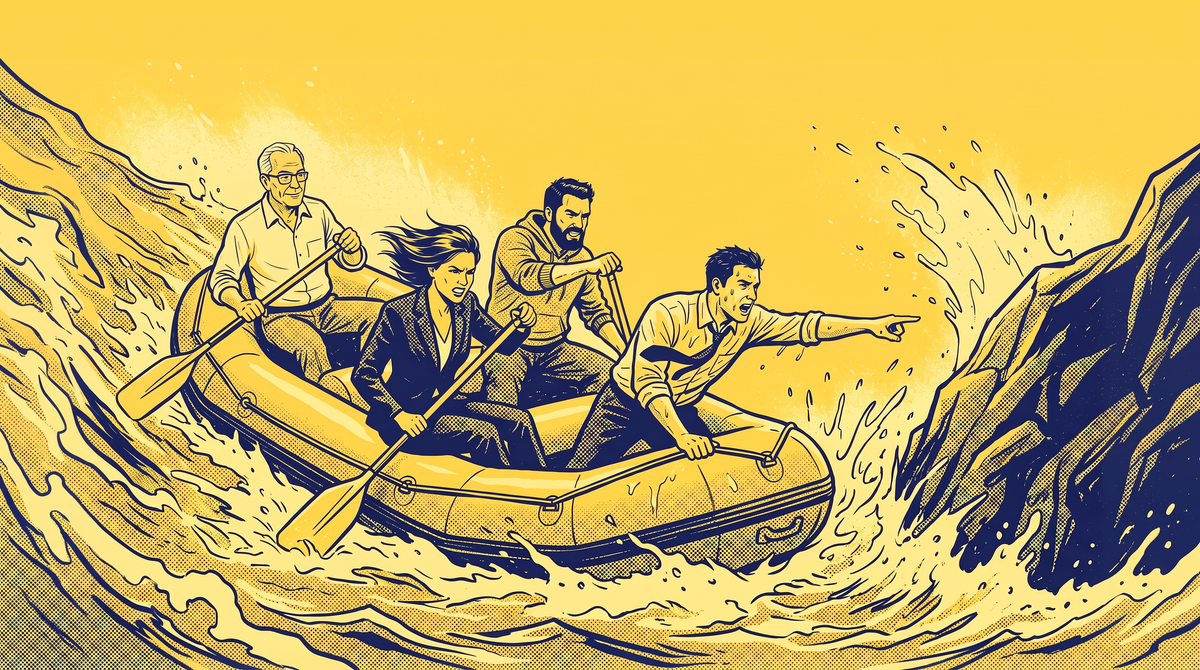
You're not driving the process now, you're navigating theirs. Like a white-water rafter trying not to get smashed on the rocks.
And sales isn't the only one in the boat. Your CTO and delivery team get pulled into the security review and the architecture board.
Miss their planning window and a perfectly healthy deal slips twelve months. Nobody said no. You just weren't in this year's budget.
Ouch! Better luck next year!
3. People involved
Ah… remember when the purchase really was down to one person?
Now? It's champions, exec sponsors, domain experts, architects, compliance, procurement, legal and… That's before you count the steering groups and committees they all sit on.
The person that loves you, the one that hates you and does everything to kill your deal, and the partner that plays golf with the board member and wants your competitor to win.
Dozens of players, twice as many agendas, and a tightrope to try and get them all on-side. Single-threaded deals die the day the champion leaves.
But sales is rarely the only thread. Marketing reaches that committee before the first meeting. Pre-sales sits with their architects. Your CTO gets the peer conversation no AE is invited to.
So, I hope everyone leaves my session next week having better conversations about deals, because they'll finally be looking at the same buyer.
Understanding the buyer is a whole-company job.
Next time you book sales training, bring your friends. (CTOs very welcome.)